
Best Practices for Responsible Bear Viewing on Vancouver Island
On The Infinite Coast of Vancouver Island, bears are not an attraction. They are the residents. We are the visitors.
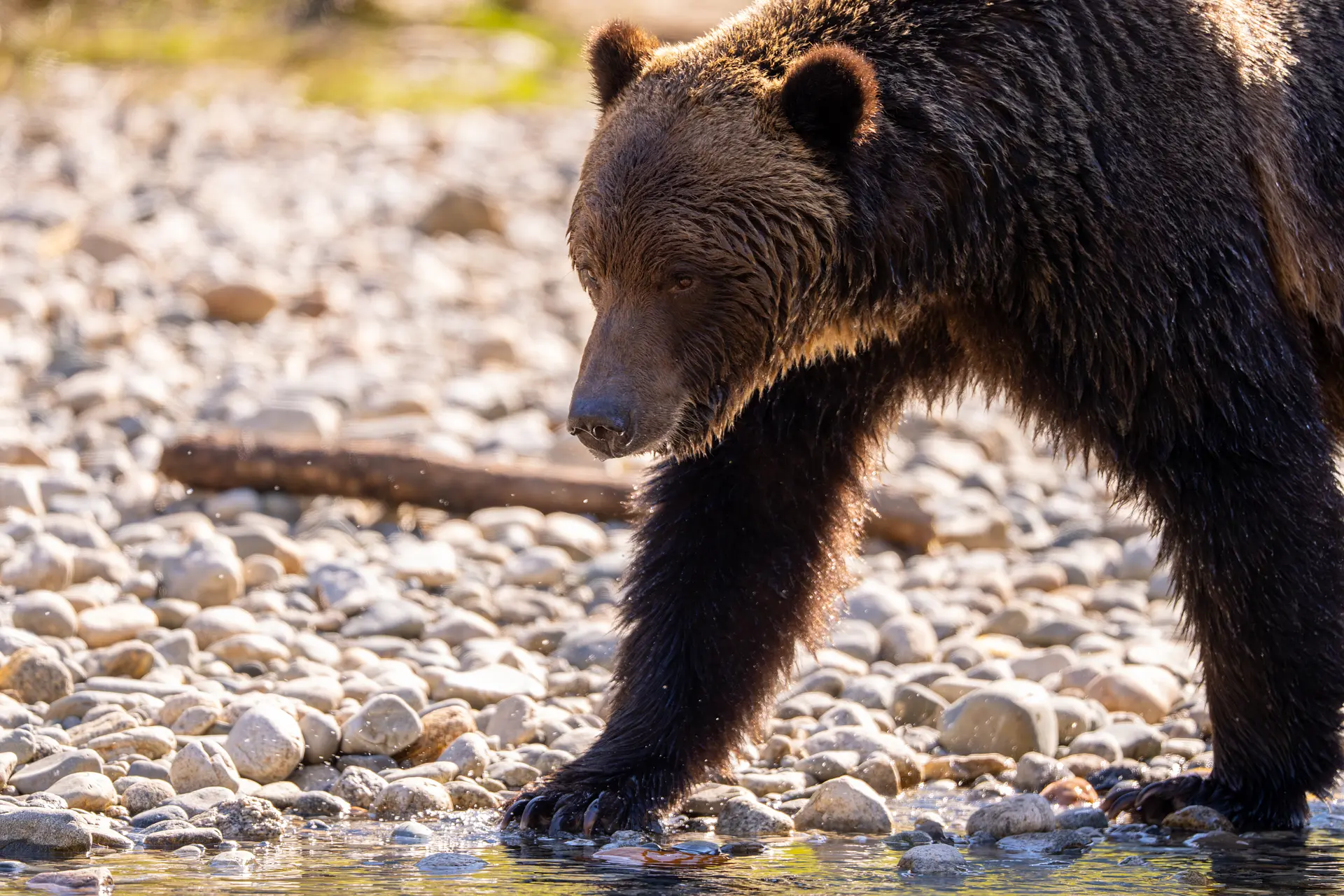
Grizzly and black bears are among the most iconic animals on Vancouver Island and the broader BC coast — elusive giants whose presence signals the health of the ecosystems that sustain them. A bear encounter in the wild is extraordinary. It is also a responsibility.
Whether you are joining a guided tour with a licensed operator or exploring bear country independently, the way you behave in the presence of bears has a direct impact on their safety, their ability to feed and rest, and the long-term viability of bear viewing as a form of low-impact tourism. The following guidelines are drawn from the Commercial Bear Viewing Association's best practices and reflect the values of stewardship that define responsible travel on The Infinite Coast.
The Guiding Principle
A bear's need to forage, rest, and move through its territory always takes precedence over your desire for a closer look. The best bear encounters are the ones the bear doesn't notice — or chooses to tolerate on its own terms.
Keeping Bears Wild
The most important thing you can do for bears is ensure they remain unassociated with human food, garbage, or reward. Once a bear connects people with food, that association is difficult to undo — and dangerous for the bear.
On any outing in bear country, carry food and waste in airtight or bear-proof containers at all times. Pack out everything you pack in. Leave no trace of your presence at viewing sites. This is not a courtesy; it is the baseline of responsible access to bear habitat.
Distance & Behaviour at Viewing Sites
There is no fixed minimum distance that applies to every bear in every situation. Individual bears vary significantly in their tolerance of human presence — as does the same bear depending on the time of day, the season, and the activity it is engaged in. A licensed guide reads these variables continuously and positions a group accordingly.
What does not vary is the principle: once a respectful distance has been established, guides allow individual bears to determine how close they choose to come. Approach is never forced. Retreat is always honoured.
When viewing bears from any distance, keep these behaviours in mind: minimize noise and movement, stay together as a group, remain in the open where bears can see you and choose to move away if they wish, and never pursue, crowd, or cut off a bear's line of travel.
Reading Bear Body Language
Bears communicate clearly. Learning to read those signals transforms a bear encounter from passive observation into genuine engagement with a wild animal on its own terms.
Signs that a bear is relaxed and undisturbed: A bear that is comfortable with your presence will resume normal activity — feeding, moving, resting — with only occasional glances toward the group. These brief, unhurried looks are a bear monitoring its environment, not a bear that is stressed.
Early signs of discomfort to watch for:
- Pausing activity to look directly and steadily at the group
- A stiffening posture or change in body orientation toward the group
- Seemingly out-of-place behaviours such as yawning, sitting down abruptly, or scratching
- Moving in and out of cover repeatedly
- An appearance of uncertainty or unease
If you observe any of these signals, increase distance immediately and give the bear space to settle.
Signs of escalating stress — move away calmly and without delay:
- Rapid teeth snapping or jaw popping
- Moaning, growling, huffing, or chuffing
- Pacing or repeated directional movement toward the group
- Ears laid back, salivating, or open-mouth display
- Ground stamping or paw swatting
- A hop charge or running charge
A stressed bear is a bear that has been pushed past its comfort threshold. The goal of responsible viewing is to never reach this point.
Choosing a Responsible Operator
Booking with a licensed bear viewing operator is the single most effective way to ensure your encounter benefits both you and the bears. Professional guides bring years of experience reading individual animal behaviour, established relationships with specific viewing sites, and accountability to industry best practices that protect bears over the long term.
When evaluating operators, look for membership in the Commercial Bear Viewing Association, adherence to WildSafeBC guidelines, and demonstrated commitment to the principle that wildlife welfare comes before guest experience.
Further Resources
For more information on bear safety, responsible viewing, and the science behind bear-human interaction in ecotourism contexts:
Seeing a bear in the wild is one of the most powerful experiences The Infinite Coast offers. Approach that privilege with the respect it deserves — for the bear, for the land, and for every visitor who comes after you.
Tags: Responsible Travel | Mindful Travel | Wildlife Viewing | Bear Viewing | Grizzly Bears | Black Bears | Wildlife Safety | Stewardship | Indigenous Territory | Vancouver Island North | The Infinite Coast | #TheInfiniteCoast | #exploreBC | @SuperNaturalBC